Hiring the right people is essential for business growth, operational efficiency, and long-term success. However, not every workforce need requires the same hiring approach. Some organizations need permanent employees who can develop with the company, while others need specialized professionals to complete projects, manage temporary workloads, or address short-term skill gaps.
Direct hire recruiting and project-based staffing support offer different advantages. Understanding how each model works can help employers make informed decisions, manage recruitment costs, and build a workforce that aligns with their business objectives.
Understanding Direct Hire Recruiting
Direct hire recruiting involves finding candidates for permanent positions within an organization. Once hired, employees generally become part of the company’s ongoing workforce and contribute to its long-term objectives.
This model is suitable for positions that require continuity, institutional knowledge, and consistent involvement in daily operations. Examples include management, finance, human resources, sales, and core technical roles.
Permanent employees can develop a deeper understanding of company systems, customer expectations, and internal processes. Over time, this familiarity can improve collaboration and support stronger decision-making.
Direct hiring also gives employers opportunities to invest in employee development, leadership training, and career progression. These investments can help strengthen retention and create a more stable workforce.
However, the recruitment process can require considerable time and effort. Employers must identify candidates, review qualifications, conduct interviews, verify relevant experience, and provide appropriate onboarding.
For positions that remain important to the business over the long term, these efforts can be worthwhile.
See also: Benefits of Layer 1 Blockchain Technology
What Is Project-Based Staffing Support?
Project-based staffing support allows employers to access professionals for a specific assignment, project, or defined period of increased demand.
For example, a company introducing new software may need temporary technical specialists, while a business preparing for a product launch may require additional marketing professionals. Instead of creating permanent positions, the employer can seek talent suited to the project’s requirements.
This approach provides flexibility because staffing resources can be aligned with the scope and duration of the work. It can also help businesses access specialized expertise that they do not need on a full-time basis.
Organizations evaluating their recruitment options may consider talentohrpartners as a starting point for learning about HR and staffing services that could fit their workforce requirements.
Project-based arrangements should include clear expectations about responsibilities, deliverables, deadlines, and payment terms. Employers should also determine the appropriate employment or contracting structure based on applicable laws and the actual working relationship.
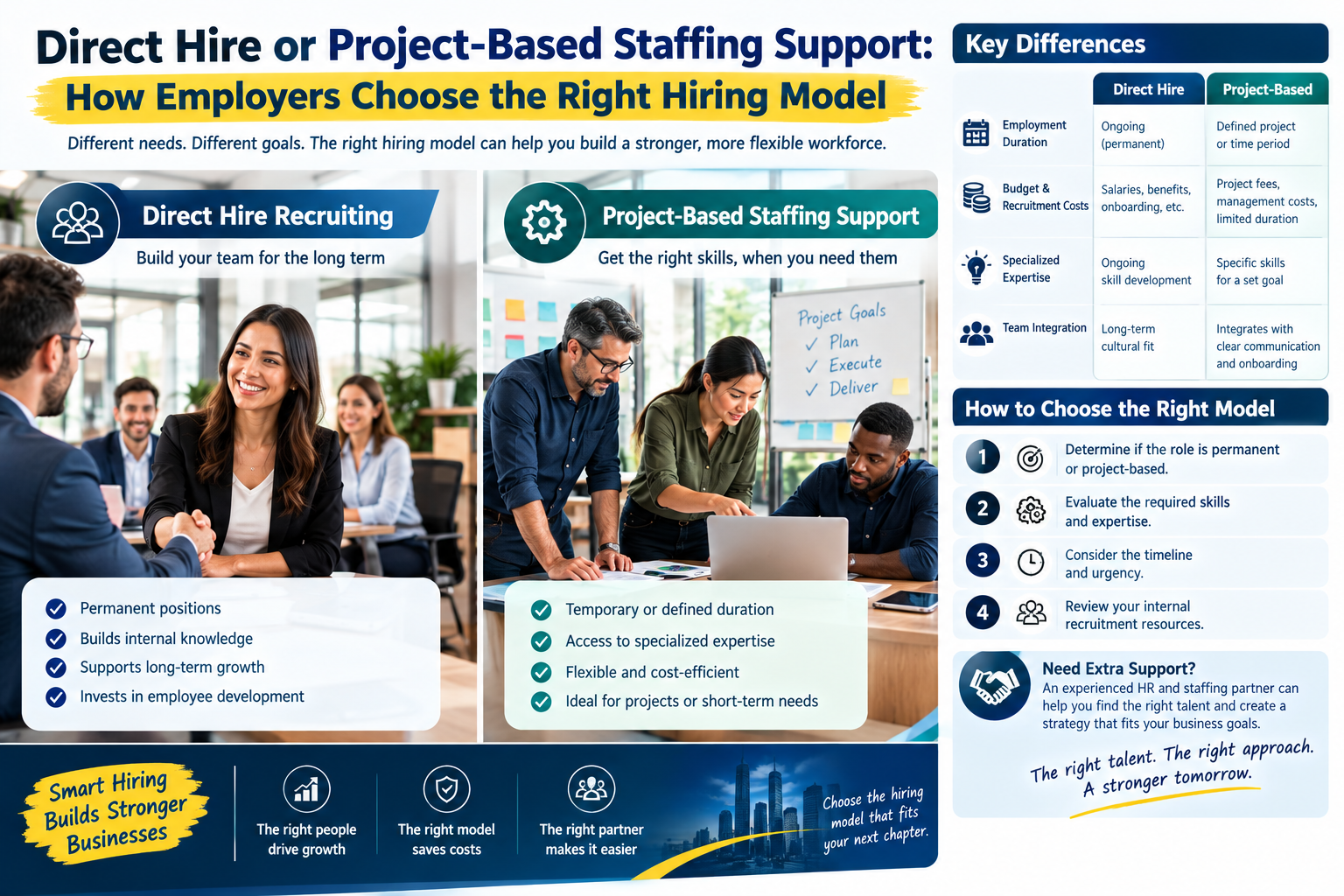
Key Differences Between the Two Hiring Models
Although direct hire and project-based staffing both help businesses find talent, their suitability depends on the nature of the work.
Employment Duration
Direct hire is generally intended for ongoing employment. It is appropriate when a role remains necessary as the business develops and requires consistent contributions over time.
Project-based staffing is usually connected to a defined assignment or temporary business need. The engagement may last several weeks or months, depending on the complexity of the project.
Budget and Recruitment Costs
Permanent hiring may involve recruitment fees, salaries, benefits, onboarding, and ongoing employment costs. Employers should consider the complete cost of maintaining a position rather than focusing only on recruitment expenses.
Project-based staffing may make it easier to plan expenses around a defined scope of work. However, employers should account for staffing fees, project management, and any additional costs associated with the engagement.
Neither option is automatically less expensive. The right choice depends on how long the expertise is needed and the value the professional is expected to deliver.
Access to Specialized Expertise
Direct hire is often appropriate when a business needs particular skills on an ongoing basis. Permanent employees can develop internal knowledge and contribute to continuous improvement.
Project-based staffing is useful when specialized expertise is needed for a specific challenge. Employers can bring in professionals for a limited assignment without necessarily adding a permanent role.
Team Integration
Permanent employees generally have more opportunities to develop long-term relationships with colleagues and become familiar with company culture.
Project-based professionals can also integrate effectively when employers provide clear instructions, suitable onboarding, and access to relevant resources. Effective communication helps temporary team members understand priorities and deliver results.
How Employers Can Select the Right Hiring Model
Choosing between direct hire and project-based staffing begins with identifying the business need.
1. Determine Whether the Role Is Permanent
If the position supports everyday operations and will remain necessary for the foreseeable future, direct hire may be the stronger choice.
If the work is connected to a specific project, seasonal demand, or temporary increase in workload, project-based staffing may provide greater flexibility.
2. Evaluate the Required Skills
Some roles require extensive knowledge of internal systems, company procedures, and customer relationships. These positions may benefit from permanent employees who can develop their expertise over time.
Other assignments require specialized knowledge for a clearly defined objective. In those cases, a project-based professional may be a practical option.
3. Consider the Timeline
Employers should determine how quickly the position must be filled and how long the work is expected to continue.
A project with a fixed deadline may require rapid access to professionals with relevant experience. Permanent recruitment, meanwhile, should allow enough time to assess candidates carefully and select someone who fits the role and organization.
4. Review Internal Recruitment Resources
Some companies have established HR departments that can manage recruitment internally. Smaller businesses may have limited time or staffing resources, making external recruitment support useful.
A staffing provider can help employers clarify job requirements, identify potential candidates, and organize the hiring process. The provider’s experience, recruitment methods, and understanding of the business should be considered before making a decision.
Why an HR and Staffing Partner Can Help
An experienced HR and staffing partner can help employers assess their workforce needs and select a suitable recruitment strategy. Support may include identifying skill gaps, improving job descriptions, coordinating candidate searches, and reviewing hiring processes.
For businesses in Texas, an HR and staffing partner in Fort Worth may be worth considering when exploring recruitment support that aligns with local workforce requirements and business objectives.
Employers should evaluate potential partners based on their industry knowledge, communication practices, service scope, and ability to understand the organization’s needs. It is also important to establish expectations about candidate screening, timelines, fees, and ongoing communication.
A productive staffing relationship focuses on more than filling vacancies. It helps the employer understand which roles are essential, what skills are required, and how recruitment decisions support broader business goals.
Can Companies Combine Both Hiring Models?
Direct hire and project-based staffing do not have to be competing strategies. Many organizations benefit from using both approaches as their needs change.
For instance, a company may maintain a permanent team responsible for core business operations while bringing in additional professionals during a major expansion or technology implementation.
Once the project is completed, the company can review its future needs and determine whether additional permanent positions are justified.
This blended approach allows employers to maintain continuity in essential functions while adapting to temporary changes in workload. It can also help organizations avoid making permanent staffing commitments before understanding their long-term requirements.
To make this approach effective, employers should establish clear responsibilities, communication procedures, and suitable arrangements for everyone involved.
Conclusion
Choosing between direct hire and project-based staffing support requires a clear understanding of business priorities, workforce requirements, budget, and project duration.
Direct hire is generally better suited to permanent roles that require continuity and long-term organizational involvement. Project-based staffing can be more appropriate when businesses need specialized expertise or additional capacity for a defined assignment.
By evaluating the nature of the work and the resources available internally, employers can make better hiring decisions and develop a workforce strategy that supports sustainable growth. With the right approach, businesses can balance stability and flexibility while ensuring they have the talent needed to achieve their goals.