Booking a service you’ve never had done before always comes with a bit of uncertainty about what to actually expect once someone shows up at your door. Air duct cleaning in Boston follows a fairly consistent process from company to company, and knowing what each step involves ahead of time makes the whole experience far less of a mystery, whether you’re scheduling it for the first time or just curious what you’re paying for after noticing your allergies acting up more than usual at home.
Before Anyone Touches a Vent: The Initial Walkthrough
A proper visit starts with a technician walking through the home or business to understand the scope of the system. This includes counting the number of vents, checking the layout of the ductwork, and noting the type and condition of the HVAC system connected to it. This step matters because pricing and time estimates depend directly on the size and complexity of the system, and skipping it in favor of a generic flat rate is often a sign of a less thorough operation. A technician who takes this initial assessment seriously is also more likely to catch existing issues, like a disconnected duct section or a damaged vent cover, before the cleaning even begins.
Protecting the Space Before Cleaning Begins
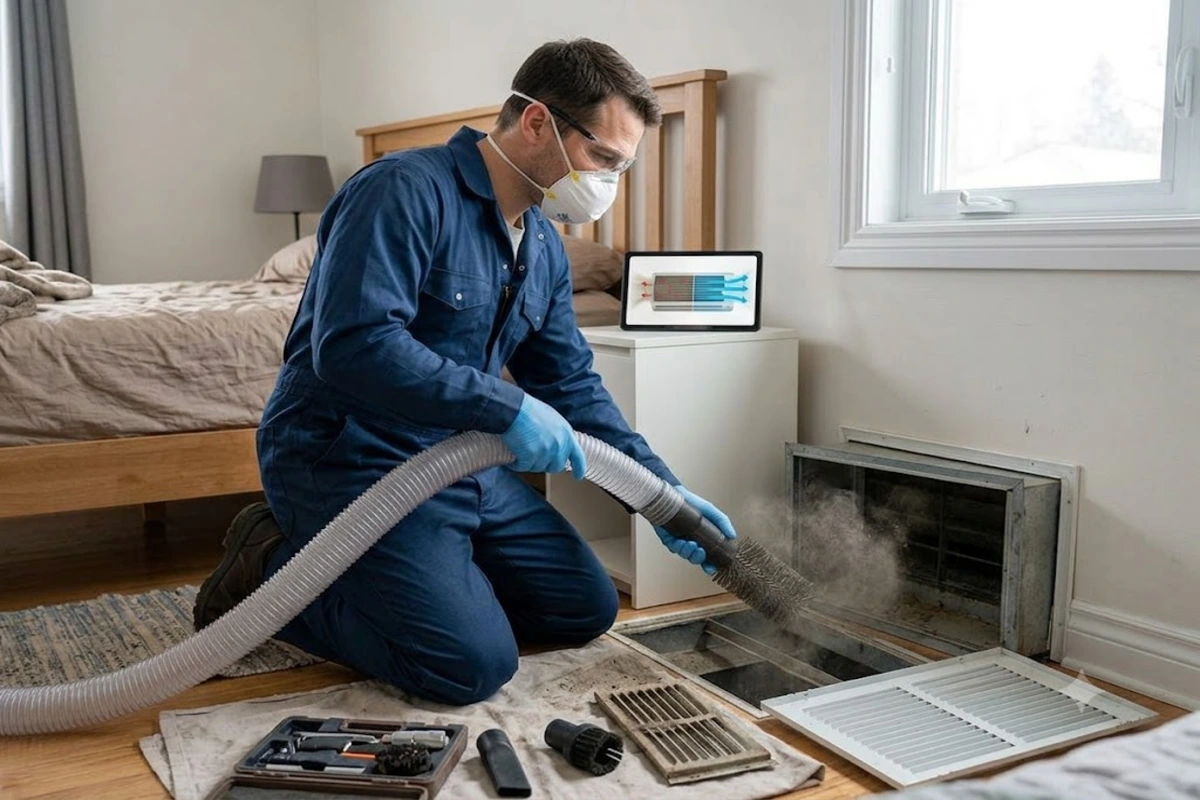
Before any actual cleaning starts, technicians typically lay down protective coverings on floors and furniture near vent openings. This isn’t just a courtesy, it prevents dislodged dust and debris from settling back onto surfaces in the home during the cleaning process. A company that skips this step risks leaving a bigger mess behind than the one they were hired to clean up in the first place, which is exactly the opposite of what the service is supposed to accomplish.
Creating Negative Pressure in the Duct System
Most professional cleanings use a powerful vacuum system connected to the main trunk line of the ductwork, creating negative pressure throughout the entire system. This negative pressure is what allows loosened debris to be pulled out of the ducts rather than simply pushed further along or blown back into the living space. Setting this up correctly is one of the more technical parts of the process, since an improperly sealed connection reduces suction efficiency significantly, and a poorly sealed setup can actually push some debris back out through unsealed vents rather than containing it.
Agitating and Dislodging Buildup Inside the Ducts
With negative pressure established, technicians use specialized tools, rotating brushes, air whips, or similar agitation devices, to physically dislodge dust, debris, and buildup from the interior walls of the ductwork. This step is what actually separates a real cleaning from simply vacuuming out what’s visible at the vent openings. Buildup that’s been sitting for years often requires more aggressive agitation than a system that’s been cleaned recently, which is part of why the process can take longer for homes that have never had this service done before. Some technicians also use a small camera to inspect sections of ductwork before and after agitation, giving both the technician and the homeowner a clear before-and-after view of exactly what was removed.
Cleaning Individual Vents and Registers
Once the main lines are cleared, technicians work through each individual vent and register throughout the home or building, cleaning them directly and making sure loosened debris from that section has been fully extracted rather than left sitting near the opening. This room-by-room pass is what ensures the cleaning covers the entire system rather than just the sections closest to the main vacuum connection, and it’s also when a technician might notice a vent that’s been painted shut or blocked by furniture, issues that are easy to miss without walking the entire home methodically.
Inspecting and Cleaning the HVAC Components
Many professional cleanings extend beyond just the ductwork itself to include the blower motor and coil components of the HVAC system. Dust and debris that accumulate on these parts can reduce system efficiency and airflow just as much as dirty ducts do, so addressing both together gives a more complete result than focusing on ductwork alone while ignoring the equipment driving air through it. Skipping this part of the system is a common shortcut among less thorough operators, since it’s less visible than the ductwork itself but often contributes just as much to poor airflow and higher energy bills.
Sanitizing the System, If Included
Some services include a sanitization step, applying an EPA-approved treatment throughout the cleaned ductwork to address any bacteria, mold spores, or odor-causing buildup that a purely mechanical cleaning might not fully eliminate. This step isn’t always included by default and is worth specifically asking about if it matters to your household, particularly for homes with pets, smokers, or previous mold concerns, since a sanitizing pass addresses microbial growth in a way that agitation and vacuuming alone can’t fully resolve.
The Final Walkthrough and What You Should See
A thorough technician finishes the job with a final walkthrough, confirming vents are reassembled properly, any protective coverings have been removed, and the workspace is left clean. Many companies also show before-and-after evidence of the debris removed, whether that’s a visual inspection or footage from a camera used during the process, giving you a tangible sense of what was actually accomplished rather than just taking their word for it.
How Long the Whole Process Typically Takes
For an average residential system, a full air duct cleaning typically takes two to four hours depending on the number of vents, the complexity of the ductwork, and how much buildup has accumulated over time. Larger homes or systems that haven’t been cleaned in many years can take longer, while a smaller apartment with a simpler duct layout usually finishes on the faster end of that range, and a company that quotes the exact same time estimate for every job regardless of size is worth double-checking before booking.
What You Can Do to Prepare Before the Technician Arrives
A little preparation on your end speeds up the visit considerably. Clearing furniture away from vent openings, securing pets in a separate room, and making sure the technician has clear access to the HVAC unit itself, whether it’s in a basement, closet, or attic, all help the process move smoothly without unnecessary delays caused by needing to move things out of the way mid-job. Letting the company know in advance about any tight access points, like a crawlspace or a locked utility room, also helps them bring the right equipment on the first trip rather than needing to return.
See also: How Trade Business Management Software Simplifies Business Administration
Questions Homeowners Often Have About the Process
Will air duct cleaning make a mess in my home? A properly conducted cleaning shouldn’t leave a mess, since technicians use protective coverings and a sealed vacuum system specifically designed to contain the debris being removed rather than scatter it around your home. If you notice visible dust settling after a cleaning, that’s usually a sign the negative pressure setup wasn’t sealed properly during the job.
Do I need to be home during the entire cleaning? Being present at the start and end of the visit is generally sufficient, though some homeowners prefer to stay throughout, particularly for their first experience with the service.
How can I tell if the cleaning was actually thorough? Ask for before-and-after evidence of the debris removed, and pay attention to whether every vent in the home was addressed rather than just the ones nearest the main duct connection.
Does cleaning include the dryer vent, or is that separate? Dryer vent cleaning is typically a separate service from air duct cleaning, since it’s a distinct system with its own buildup risks, most notably lint accumulation, which is why many companies offer it as an add-on rather than bundling it automatically.
Knowing What You’re Paying For
Understanding each step of a professional air duct cleaning in Boston, from the initial walkthrough to the final inspection, makes it much easier to recognize a thorough job when you see one and to ask the right questions if a company seems to be skipping steps. The next time you schedule this kind of service, you’ll know exactly what should be happening behind the scenes rather than just hoping the result turns out well.
Homes and businesses across the Boston area rely on Mass Green Air Duct Cleaning, whose technicians follow this exact process, from initial inspection through final walkthrough, using HEPA-filtered equipment and EPA-approved methods to make sure nothing gets skipped.