Drywall damage ranges from small holes and nail pops to water-affected panels and ceiling cracks. Handymen assess the damage to establish whether the work involves patching or panel replacement. The right repair method helps confirm repairs are stable, and professionals blend patches to match the surrounding wall. Here are a few things to know about drywall repair:
Identifying Particular Drywall Damage
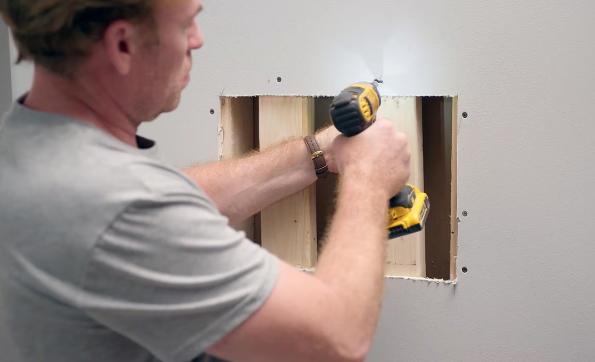
Drywall damage comes in several forms, and each condition affects the finished surface differently. Small holes, nail pops, doorknob dings, and anchor openings typically involve localized areas rather than an entire panel. Larger cutouts affect more surface area and require a broader repair approach.
Damage around an outside corner differs from damage on a flat wall because the corner bead may need to be repaired or reset. Water-damaged panels require a different approach because the affected drywall needs to be removed rather than simply patched. Determining whether the damage involves a small hole, nail pop, damaged corner bead, larger section, or water-damaged panel helps identify the appropriate repair method.
Ceiling damage also involves conditions that differ from typical wall repairs. Cracks may require ceiling crack repair and new taping, while popcorn ceilings require a different surface treatment. Smooth ceilings need refinishing that matches their existing appearance, and damaged ceiling panels require sections of drywall to be replaced.
See also: 5 Offbeat Places in Egypt You Can Visit with a Tourist Visa
Assessing the Extent of Damage
The scope of drywall repair varies according to the type and size of the affected area. Small holes under three inches and scattered nail pops across one or two walls are typically handled as localized repairs rather than requiring replacement of an entire panel. Larger damaged sections require more extensive patching or panel replacement, while water-damaged drywall requires removal when the material has been compromised. Assessing the size and distribution of the affected area helps determine whether localized patching or broader drywall work is appropriate.
The location of the drywall also affects the materials and work involved. Bathrooms typically use moisture-resistant drywall, while garages and basements involve specific drywall installation requirements based on the space. Ceiling projects involve panel hanging and, where needed, blocking between framing members, while full-room installations and room additions require broader panel coverage. In basements and on exterior walls, checking the wall cavity for active moisture intrusion should take place before drywall work begins.
Matching Textures and Finishes
A repaired drywall area needs to match its surroundings when the existing surface has a texture such as orange peel or knockdown. Orange peel is a fine, pebbled finish, while knockdown features a textured pattern that is partially flattened. Texture matching recreates the existing finish over the repaired area so it blends with the surrounding drywall. Smooth ceiling refinishing addresses ceilings with a uniform, nontextured surface, requiring the repaired area to be finished consistently with the rest of the ceiling.
Schedule Drywall Repairs Today
Drywall work covers repairs, replacement, installation, texture matching, and finishing for different wall and ceiling conditions. Professional drywall repair addresses damaged areas, while installation and replacement support projects that require new boards. Contact a qualified handyman service to discuss the specific drywall work your property requires.